Precious metals in semiconductors: key materials and value reassessment in industrial upgrading
Keywords: semiconductor precious metals, platinum group metals, electronic materials, industry chain, supply and demand, price drivers, technology substitution
Introduction
As the global semiconductor industry expands and advanced processes evolve, precious metals have moved beyond traditional jewelry and investments to become key functional materials deeply embedded in chip manufacturing, packaging, interconnection materials, and sensor devices. In particular, gold, silver, palladium, platinum, ruthenium, iridium, etc., serve as critical basic resources supporting the electronics industry due to their excellent conductivity, oxidation resistance, corrosion resistance, and high-temperature stability.
At the macro level, recent commodity market volatility has increased, with industrial metals under pressure and precious metal prices diverging, raising attention to raw material costs and supply security across the chain.
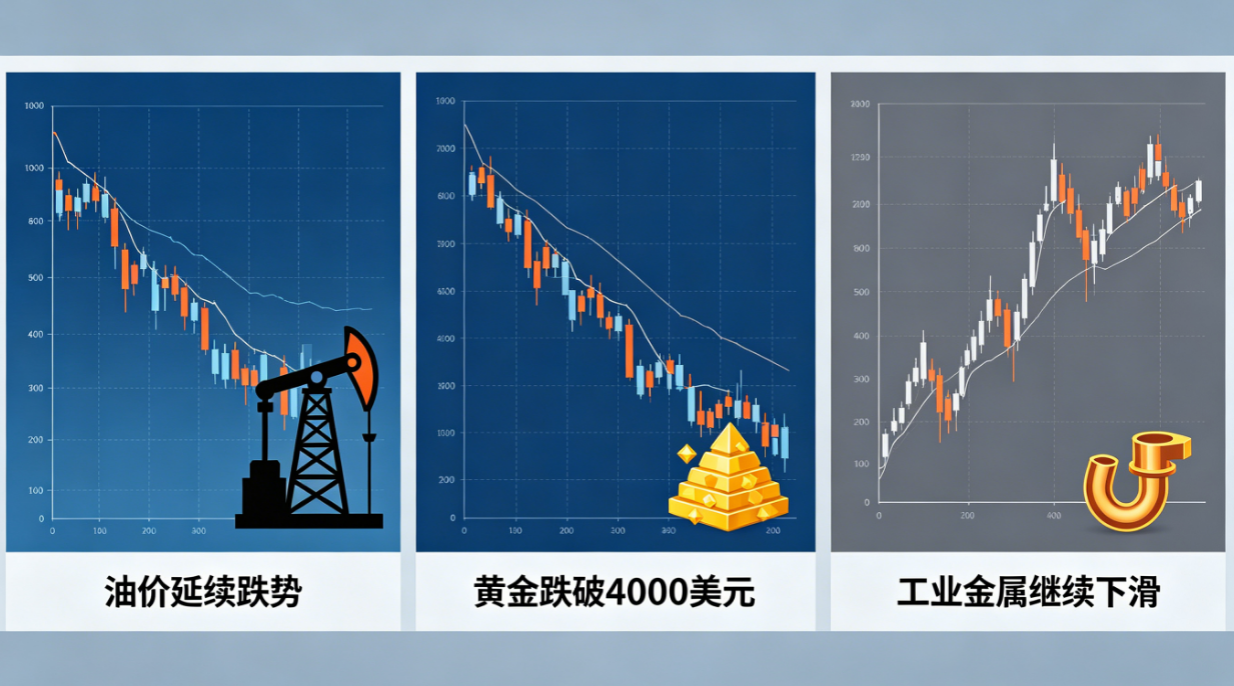
In this context, the importance of semiconductor precious metals is further amplified: on one hand, they determine device performance and reliability; on the other hand, their supply-demand dynamics and price volatility affect cost control and supply chain strategies of semiconductor manufacturers. Understanding semiconductor precious metals is key to understanding not just materials but also the underlying logic of the global high-tech industry.
1. Core value: from material to performance lever
Semiconductor manufacturing demands extremely high material purity. Internal chip conductive paths, solder joints, bond wires, thin-film electrodes, and some sensor structures require stable performance at the nanoscale. Compared to common metals, precious metals offer several irreplaceable advantages:
First, superior conductivity and contact performance.
Gold, silver, etc., have excellent conductivity, significantly reducing resistive losses and improving signal transmission. This is critical in high-frequency devices, RF modules, and advanced packaging.
Second, excellent oxidation and corrosion resistance.
Semiconductor devices often operate in high-temperature, humid, vacuum, or complex chemical environments. Precious metals maintain long-term stability, reducing contact failure and performance degradation.
Third, high thermal stability and chemical inertness.
During wafer manufacturing, deposition, and high-temperature packaging, some platinum group metals exhibit high stability, suitable for critical parts under extreme conditions.
Fourth, functional versatility and process compatibility.
Some precious metals serve not only as conductors but also as catalytic layers, barrier layers, thin-film electrodes, or components of sensitive elements, widely used in sensors, MEMS, power devices, and compound semiconductors.
Thus, semiconductor precious metals are not just expensive; more importantly, they add high value in performance and reliability.
2. Major semiconductor precious metals and their applications
Common precious metals in the semiconductor industry include gold, silver, palladium, platinum, as well as rhodium, ruthenium, iridium, etc. Differences in physical and chemical properties determine their roles in the chain.
1. Gold: representative material for high-reliability interconnection and bonding
Gold has long been used for chip bond wires, lead frame plating, contact points, and high-end packaging. Its advantages of stable conductivity and strong corrosion resistance make it suitable for military, aerospace, automotive electronics, and high-end industrial control requiring extreme reliability. Due to high cost, gold is gradually being replaced by copper and silver in some conventional scenarios, but remains irreplaceable in high-reliability fields.
2. Silver: preferred material for high conductivity
Silver is one of the best conductors, widely used in conductive pastes, silver adhesives, packaging conductive materials, and some flexible electronics. With growth in photovoltaics, Mini LED, advanced packaging, and high-frequency communication, silver's position in electronic materials remains solid. However, silver faces migration, sulfidation, and long-term reliability issues, often requiring compounding with other materials.
3. Palladium: important raw material for electrodes, pastes, and MLCCs
Palladium is widely used in electronic components, especially in MLCCs, thick-film circuits, contact materials, and solder systems. Although partially replaced by nickel and copper in recent years, palladium still has strong process advantages in high-end components and special packaging. Its price volatility is amplified by demand from automotive electronics and passive components.
4. Platinum group metals: key support for advanced processes and sensors
Platinum, ruthenium, iridium, etc., are used in semiconductor fields for thin-film electrodes, catalytic layers, barrier layers, memory devices, and gas sensors. With rapid development of third-generation semiconductors, advanced logic devices, memory, and sensor technology, the functional value of PGM is rising. Particularly in devices operating in high-temperature, highly corrosive environments, these metals offer great stability.
3. Supply and demand: semiconductor expansion meets resource constraints
The market logic for semiconductor precious metals is not exactly the same as traditional precious metal investing. Their prices are influenced not only by macro financial attributes but also by industrial demand, mine supply, and recycling systems.
1. Demand side: high-end manufacturing drives long-term growth
With expansion of AI servers, autonomous driving, 5G/6G, advanced packaging, power semiconductors, and sensors, consumption of precious metals in electronic materials is steadily rising. Especially in high-reliability packaging and high-frequency high-speed communications, demand for gold, silver, palladium, etc., is still increasing.
2. Supply side: high resource concentration, significant supply risk
Precious metal resources are generally characterized by concentrated deposits, fluctuating output, and high replacement difficulty. This is especially true for PGMs, with major producing regions limited to a few countries. Any geopolitical changes, energy prices, strikes, or environmental policies can impact supply. For semiconductor companies relying on stable supply, supply chain security has become a strategic issue.
3. Recycling side: recycling becomes important supplement
Precious metals in e-waste, scrap chips, waste packaging, and industrial liquid waste have high recovery value. As circular economy deepens, precious metal recycling is upgrading from a supplementary channel to a strategic resource. In the future, e-scrap recovery efficiency, purification technology, and closed-loop supply systems will be important components of semiconductor material competitiveness.
4. Price volatility and chain response: cost management more important than mere procurement
Semiconductor precious metal prices are generally affected by three factors: macro financial environment, industrial demand changes, and supply disruptions. Currently, global commodity markets are volatile, and precious metals show clear divergence: some supported by safe-haven sentiment, others pressured by slowing industrial demand. For semiconductor companies, the key is not just ability to buy but whether they can buy stably and controllably.
Thus, companies commonly adopt the following strategies:
- Long-term contracts and diversified supply: reduce single supplier risk;
- Material substitution and process optimization: reduce precious metal usage while meeting performance;
- Inventory management and hedging: mitigate price volatility impact on profits;
- Recycling closed-loop system: improve precious metal reuse rate;
- Joint R&D: material and chip companies co-develop new low-precious-metal formulations.
In short, semiconductor precious metal management has evolved from traditional procurement to a systematic project covering R&D, production, supply chain, and finance.
5. Future trends: high performance, less consumption, and sustainability
Looking ahead, the semiconductor precious metal industry will see three major trends.
First, material reduction accelerates.
Usage of precious metals will continue to be optimized without reducing performance, with low-silver, palladium-free, and less-gold processes advancing.
Second, high-end applications drive structural demand growth.
In high-frequency communication, AI chips, automotive electronics, sensors, and third-generation semiconductors, demand for precious metals will not disappear but concentrate in high-value-added areas.
Third, green recycling and supply chain resilience become competitive focus.
Those who establish more efficient recycling systems, more stable supply networks, and lower-carbon material systems will gain the upper hand in future competition.
Conclusion
Semiconductor precious metals are both basic raw materials for high-end manufacturing and strategic resources determining product performance, reliability, and industrial security. Amid global chain restructuring, rapid tech iteration, and commodity volatility, the role of precious metals is upgrading from traditional materials to core competitive variables.
In the future, demand for precious metals in semiconductors will not simply grow linearly but follow a path of high-end, refined, and circular development. For companies, true competitiveness lies not just in obtaining precious metal resources but in building long-term advantages through process innovation, supply chain management, and recycling. It is foreseeable that semiconductor precious metals will continue to play an irreplaceable role in the new wave of technological revolution.