Precious Metals Market Sees Cliff-Like Crash: Risks and Lessons Behind Hundreds of Billions Evaporated
Introduction
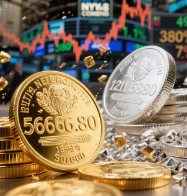
On July 29, 2026, the global precious metals market experienced a breathtaking shock. COMEX gold futures briefly hit an all-time high of $5,626.80 per ounce in early trading, and silver futures also touched a high of $121.785 per ounce. However, just as the market was celebrating, a sudden violent sell-off swept like a tsunami. Gold prices plummeted $380 in just 28 minutes, a drop of nearly 7%; silver fell 11% simultaneously, far exceeding gold. This abrupt market anomaly not only caught countless investors off guard but also sparked widespread attention and deep reflection in global financial markets.
I. Market Environment Before the Crash: Bubble and Frenzy
Before the crash, the precious metals market had experienced a continuous rally lasting several months. Global macroeconomic uncertainty, rising inflation expectations, escalating geopolitical risks, and continued loose monetary policies of central banks jointly drove safe-haven demand for gold and silver. Investors flooded into the precious metals market, viewing it as a 'Noah's Ark' against asset depreciation.
Gold prices rose from less than $4,500/oz at the start of the year to over $5,600, a gain of more than 20%; silver's rise was even more astounding, breaking above the $120/oz historical level. Market sentiment was extremely euphoric, with high-risk activities like leveraged trading and derivatives speculation becoming increasingly active. Against this backdrop, the market accumulated large amounts of profit-taking positions, technical indicators were severely overbought, and any small catalyst could trigger a chain reaction.
II. Crash Process: A 28-Minute Financial Storm
In early trading on July 29, after prices hit a new high, the market suddenly saw massive sell orders. These sell orders did not come from ordinary retail investors but from institutional investors' large-scale selling. Algorithmic trading systems were triggered, followed by stop-loss and margin call orders, forming a typical 'waterfall decline' pattern.
Data shows that in the first five minutes, gold futures fell more than $150. Over the next 20 minutes, selling pressure intensified, and prices accelerated downward. By the 28th minute, gold had fallen to near $4,950. Silver's trajectory was more devastating, falling from around $121 to around $108, a drop of more than 11%. Trading volume surged several times in a short period, and market liquidity evaporated sharply.
Such 'flash crashes' are not uncommon in financial history—the 2010 US stock market 'flash crash' and the 2020 negative oil price event both left profound lessons. However, the speed and magnitude of this precious metals crash remain shocking.
III. Deep Reasons Behind the Crash
This crash was no accident but the result of multiple factors interacting:
1. Technical Correction and Profit-Taking
After a prolonged one-sided rally, the market had accumulated huge unrealized gains. When prices hit new highs, some funds chose to cash out, creating initial selling pressure. Overbought technical conditions also made the market prone to deep corrections.
2. Concentrated Liquidation of Leveraged Positions
A large number of investors used leverage in precious metals trading. Price declines triggered stop-loss and margin call orders, creating a vicious cycle. Since leveraged trades are typically larger in size, the resulting liquidations intensified the price drop.
3. Chain Reaction of Algorithmic Trading
In modern financial markets, algorithmic and program trading occupies a significant role. When prices breached certain key levels, numerous algorithmic trading systems automatically executed sell orders, causing liquidity to dry up instantly and prices to plunge in a cliff-like manner.
4. Shift in Fundamental Expectations
Some analysts believe the market may have anticipated changes in future economic data or policies. For example, unexpectedly strong US employment data, sudden hawkish signals from the Fed, or tough measures by major economies to curb inflation could quickly erode the risk premium in precious metals.
IV. Market Impact and Investor Lessons
This crash had far-reaching effects on global financial markets. First, the violent price swings caused heavy losses for many investors, with numerous high-leverage accounts forced to liquidate. Second, market confidence was severely damaged, and precious metal prices may remain weak in the short term. Additionally, panic could spread to other asset classes, triggering a new round of adjustments in global financial markets.
For investors, this event serves as another warning:
- Risk management is the bottom line of investing: Never use leverage beyond your affordability, and always respect market risks.
- Diversification is crucial: Concentrating all capital on a single asset or market is akin to gambling. Reasonable asset allocation can weather bull and bear markets.
- Beware of extreme market emotions: When the market shows extreme optimism or pessimism, it often signals an inflection point.
- Understand the complexity of financial instruments: Tools like algorithmic trading and derivatives can amplify returns but also risks. Fully understand the potential risks before participating.
Conclusion
The precious metals market crash on July 29, 2026, was a textbook financial storm. It perfectly illustrated the entire process from frenzy to panic and exposed the vulnerabilities in the modern financial system. History repeatedly proves that no asset can only rise without falling; the law of mean reversion always holds.
For investors, this event brings not despair but a valuable risk education lesson. Only by establishing a scientific investment philosophy and adhering to discipline and principles can one navigate the turbulent market steadily and far. In the future, the precious metals market may experience similar volatility, but those who learn from each crisis will ultimately prevail in the long-term game.
Keywords: Precious metals plunge; gold; silver; market risk; technical selling; leveraged trading; algorithmic trading